

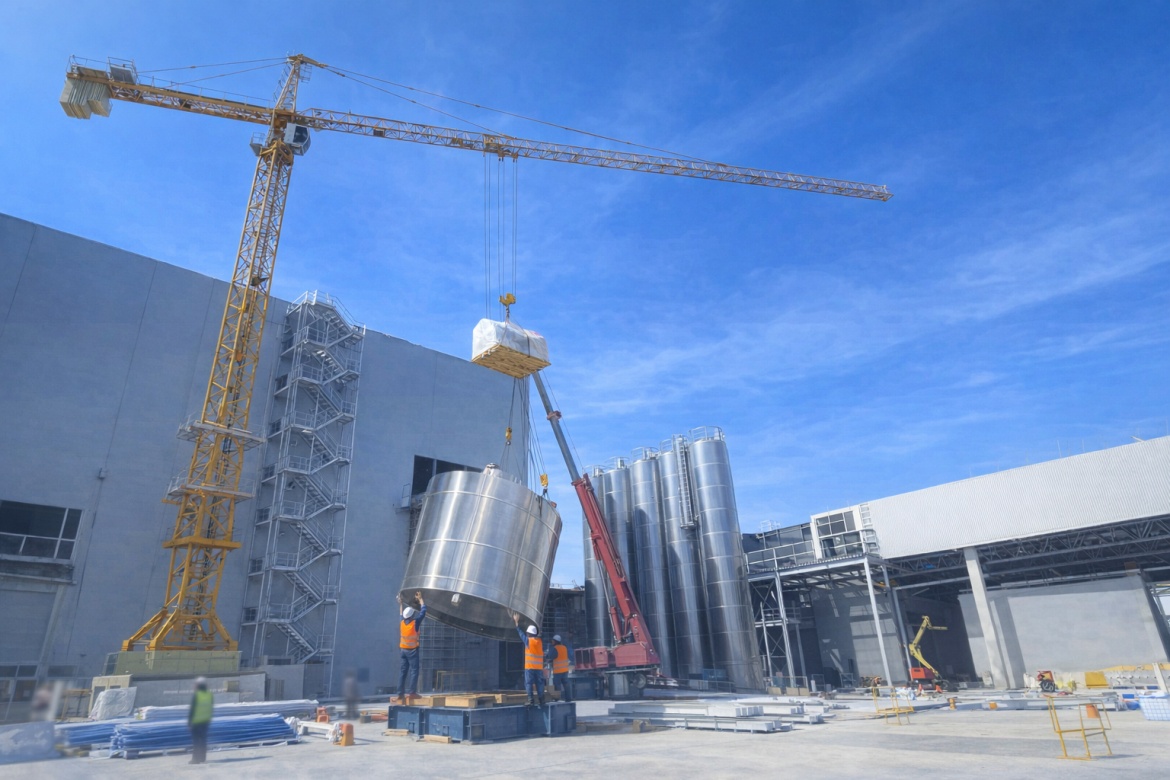
Efficient Practical Solutions in Silo and Vessel Construction
In today’s industrial environment, silo and vessel construction is far more than just storage for bulk goods and liquids. Modern production facilities demand custom-fit solutions that integrate smoothly into existing plants while flexibly adapting to different materials and operational requirements. Both material selection and the individual design of discharge systems, feeding, and connected equipment play an increasingly important role.
Technological Progress Drives Change in Silo and Vessel Construction
- Versatile selection of materials: from aluminium through stainless steels of various grades to advanced plastics and rubber
- Discharge systems precisely tailored to product type and throughput
- Project scalability—from standalone plants to large-scale silos worldwide
- Minimized logistics costs via local manufacturing and modular designs
- Safety and standards compliance—even for challenging materials and ATEX zones
Material Diversity to Meet Demanding Processes
The choice of vessel material directly influences product quality, operational safety, and maintenance requirements. High-grade stainless steels are preferred for hygienic or corrosive applications, while aluminium and coated steels offer economic advantages. For aggressive substances or where gentle handling is crucial, PE or rubber linings are effective. Especially with large outdoor silos, the material concept is developed based on requirements to balance costs, durability, and technical performance.
Supplying large-volume plants across Europe and worldwide is increasingly shaped by trends favoring local manufacturing partners—reducing transport costs and factoring in regional specifics. While Germany, the EU, and Switzerland prioritize deep vertical integration and high standards, overseas projects sometimes benefit from sourcing shell components locally. Crucially, however, the core process expertise—design, integration, and accessories—remains under the guidance and responsibility of the specialist, regardless of the source of the vessels themselves.
Discharge Systems: Optimized Integration for Smooth Processes
Each raw material presents unique silo requirements. Whether extremely difficult-to-flow or segregating bulk solids, highly viscous or even pasty media—the discharge system determines throughput, weighing accuracy, and system availability. Customized solutions are essential: agitator floors, vibration segments, or specialized stainless-steel cones can be specifically adapted to material flow and subsequent handling steps.
Innovative plant engineering reduces disturbances, optimizes discharge, and lays the foundation for precise dosing—such as by integrating weighing systems or modular components. Especially noteworthy are concepts where customers supply the large silo shell and the plant specialist delivers the complete accessory kit, process controls, and weighing and dosing technology. Operators benefit from lower investment costs and maximum customization, without compromising performance or safety.
Flexibility and Efficiency as Competitive Advantages
This individual approach often results in smaller, more compact, and cost-effective overall solutions—without being confined by standard dimensions. Lean assemblies and a concentration on core functions make modern silo systems extremely economical and low-maintenance, while still adhering to regulatory requirements.
End-to-end process integration is the focus: from project planning through fabrication, international assembly, and commissioning to training, all disciplines are coordinated and tailored to the location’s specifics. This eliminates unnecessary interfaces, reduces complexity, and provides transparent project costs.
Conclusion: Customized Silos Are Key to Future-Ready Production
With the right partner, silo and vessel projects become investments in technology and true competitive advantages. Modern systems combine maximum flexibility with operational safety, quality, and sustainable economy. As the variety of materials and processes grows, precision in planning and execution gains decisive significance.