

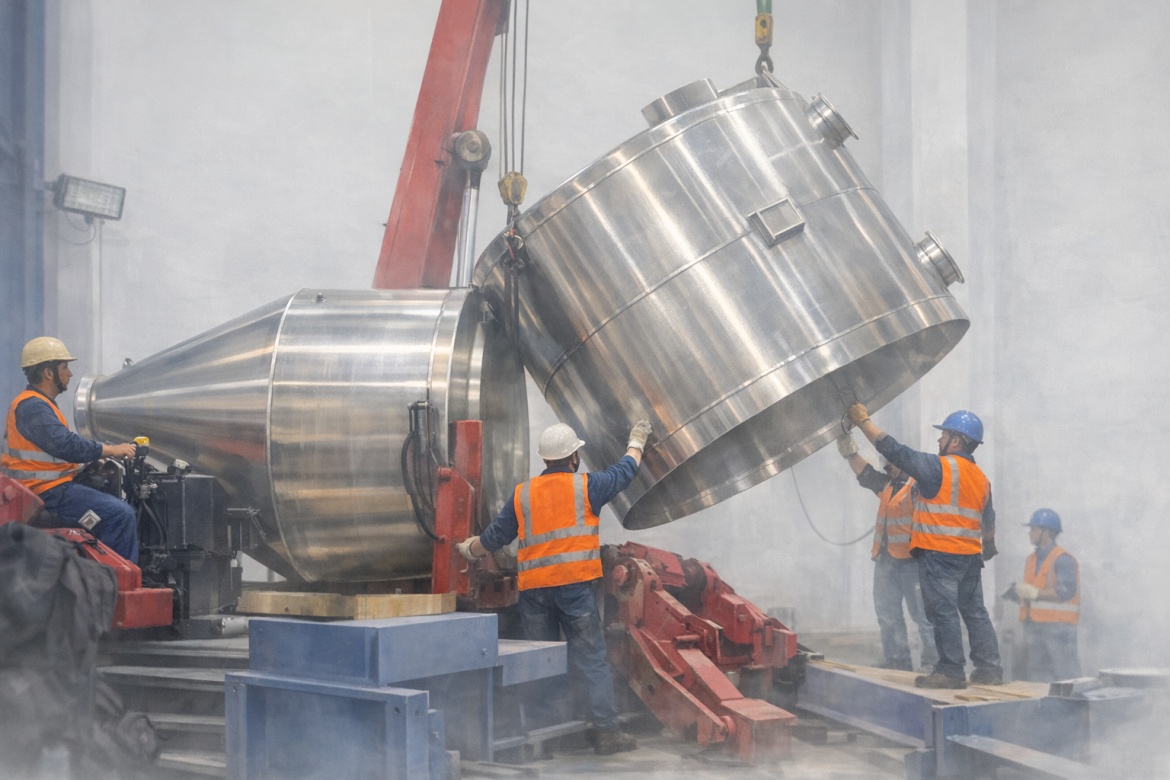
Silo and Vessel Construction for Industrial Processes: Material Selection as the Key to Success
Industrial storage and dosing of raw materials is much more than simply providing volume. In the complex interaction between product quality, process safety, and cost efficiency, properly designed silos and vessels are at the heart of modern plant concepts. A custom-planned silo is not just a storage space – it is an interface, the core element, and a competitive advantage.
Individual requirements call for tailored solutions
- Material selection precisely matched to medium and process
- Optimized discharge and conveying technology to prevent product loss
- Flexible project planning and global integration
- High cost efficiency through targeted procurement
Diverse Materials: The Right Choice for Every Raw Material
Silo construction always starts with an analysis of the product to be stored. Aluminum, mild steel, stainless steel in various grades, plastics (PE), or rubberized linings – the material influences durability, cleanability, and the safety of the vessel. Some goods require cleanroom or ATEX-compliant designs. Corrosive materials, aggressive chemicals, or sensitive foods demand specific surface and sealing concepts. Choosing the right material ensures smooth production and minimizes operational risks.
Technically, silo and vessel construction is evolving constantly: New composite materials enable lightweight solutions or increased abrasion resistance. This flexibility allows for solutions that combine robustness with cost-effectiveness.
Discharge Systems: The Key to Optimal Product Flow
A central element of any silo system is the discharge system. It is never generic, but engineered specifically for each product – whether free-flowing, dusty, strongly adhesive, or compacting. Screw conveyors, vibrating discharges, fluidized beds, agitators, or specialized discharge hoppers ensure controlled product flow. Well-planned discharge systems maintain consistent process parameters and protect sensitive raw materials from bridging or segregation.
With intelligent automation and integrated weighing, silos become active parts of the process chain, enabling precise batch handling and recipe management.
Project Planning and Global Strategy for Large-Scale Plants
Especially in the area of large silos, the trend is toward project-based planning and decentralized procurement. Silos are designed exactly according to process requirements but may be manufactured locally or sourced from regional partners. This reduces transport costs, minimizes the carbon footprint, and leverages synergies in assembly and commissioning. Leading industrial service providers support the entire process – from design calculation to delivery of all accessories: filters, safety equipment, measuring systems, and conveying technology from a single source.
Major projects thus benefit from highly flexible execution – tailored to international standards and country-specific regulations.
Synergies through Experience and Engineering Expertise
Contemporary plant construction demonstrates that standard components rarely lead to optimal solutions. Only a mix of decades of design experience, a broad technology portfolio, and in-depth knowledge of raw material logistics can yield truly effective silo and vessel concepts. Interdisciplinary teams engineer customized systems that go far beyond simple storage, actively generating added value: shorter cycles, enhanced safety, lower wear, and precise dosing.
Solutions must be as robust as they are adaptable – based on solid engineering and the latest digital tools for plant planning.
Costs, Sustainability, and Advanced Technology
Bespoke silos and vessels are no longer expensive special solutions. Many projects show that tailored designs often reveal savings potential – both in investment and operation. Flexible planning concepts foster sustainable processes: minimal waste, simple maintenance, and long service life conserve resources. Advanced measuring technology, digital monitoring, and predictive maintenance strategies turn every storage vessel into an intelligent process module.
The future of silo and vessel construction rests on a blend of precision engineering, economic process design, and environmentally conscious plant strategies.
Conclusion: Securing Competitive Advantages with Smart Silo and Vessel Solutions
Silo and vessel construction has become a discipline for forward-thinking producers. Considering materials, discharge concepts, and project planning together delivers process stability and competitive edges. Flexible, digitally networked silo solutions combine quality, efficiency, and sustainability.