

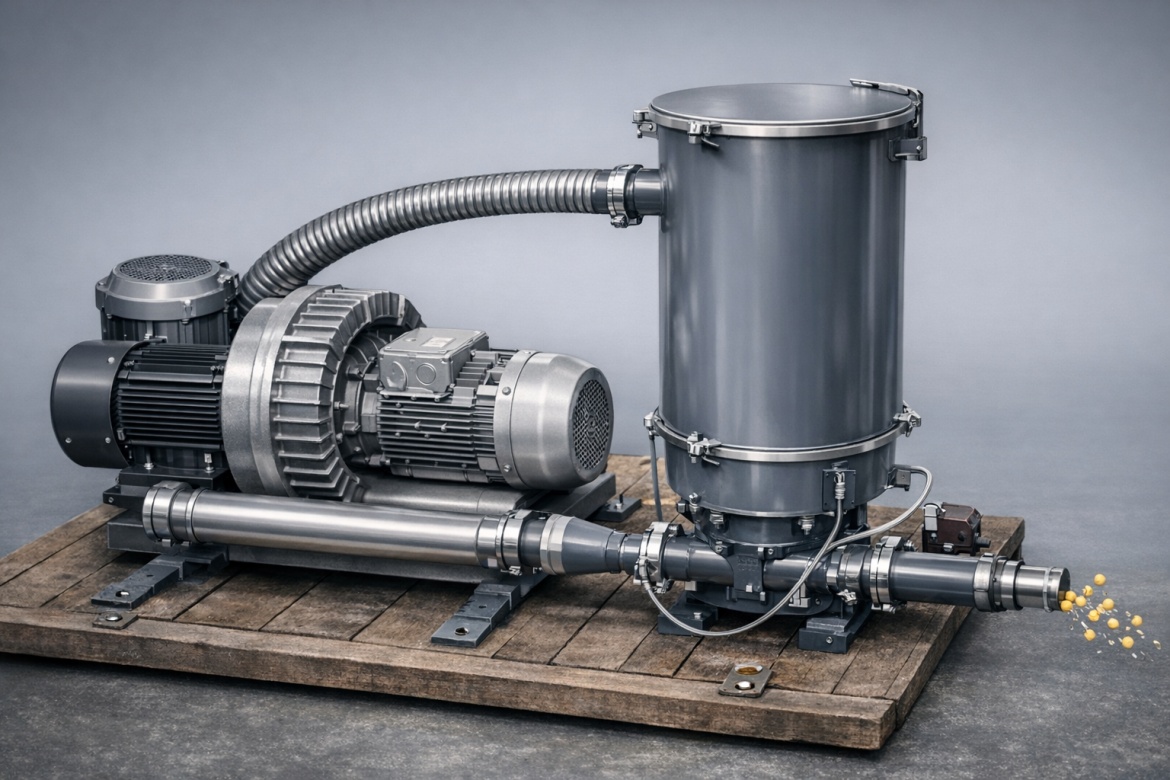
Gentle Conveying of Sensitive Products in Pneumatic Conveying Systems
Pneumatic conveying systems are indispensable across numerous industries when it comes to flexible, fast, and hygienic transportation of a wide range of bulk solids. Raw materials that are particularly sensitive to mechanical stress pose a significant challenge in the design and layout of such systems. The goal is to reduce product degradation to a minimum, ensuring quality and securing the entire value chain.
By optimizing all relevant parameters, companies can handle sensitive materials with maximum efficiency and the highest level of care.
- Product-specific adjustment of conveying velocity and pressure conditions
- Reduction of wear as well as minimization of breakage and material abrasion
- Use of optimal piping materials and innovative bend designs
- Intelligent controls for consistent material flow without blockages
- Integration of checkpoints for rapid detection of potential weak points
Pneumatic Dilute Phase and Dense Phase Conveying – Differences and Challenges
Dilute phase and dense phase conveying systems are key technologies for pneumatic transport. Each variant imposes distinct requirements regarding system design, control, and component selection. While dilute phase ensures high conveying speeds with continuous transport, dense phase is focused on particularly gentle and pressure-stable material movement. Lower velocities in dense phase allow sensitive products such as granulates or blends to be conveyed almost entirely without degradation.
Product degradation primarily occurs when material encounters high velocities or heavily loaded system parts such as bends, diverters, or discharge equipment. Optimized flow guidance, matched air volumes, and targeted conveying section design help prevent caking, material abrasion, and quality loss.
Practical Insights from Plant Engineering: Engineering Meets Product Protection
Experiences from custom plant projects show that standard solutions quickly reach their limits when maximum product protection is required. In practice, it is precise planning, the selection of optimal components, and close coordination between process engineering and automation that ensure sensitive raw materials retain their properties throughout.
Innovative plant engineering enables the combination of process reliability, efficiency, and product protection. Specially designed bends and distributers, use of wear-resistant materials, and the integration of pressure monitoring and conveying flow regulation ensure uniform, gentle material handling. Feasibility studies and comprehensive lab testing are also essential for simulating real-world operation and identifying potential weak points early on.
System Layout and Optimization: Key Factors for Project Success
A critical success factor is accurate analysis of raw material characteristics. This includes particle size, moisture, wear behavior, and the risk of agglomeration. Conveying pipes, bends, and air routing are individually tailored to the product being conveyed. Sensors and intelligent control technology ensure continuous monitoring of pressure, velocity, and material flow.
The modular design of modern systems allows adjustments and optimizations to be integrated early in the project. Short communication channels between disciplines and high flexibility in engineering ensure on-time commissioning and maximum plant availability.
Trends in Pneumatic Conveying: Digitization and Efficiency Gains
Advanced sensor technology, AI-based analysis tools, and continuous data evaluation now enable predictive maintenance and process optimization. By networking plant controls with digital monitoring systems, product losses, energy consumption, and degradation can be significantly reduced.
Pneumatic conveying systems play a crucial role in the profitability and quality standards of modern industrial production. Businesses that focus on customized system solutions secure advantages by achieving higher product yields and lower reject rates—a worthwhile investment throughout the entire lifecycle of the plant.