

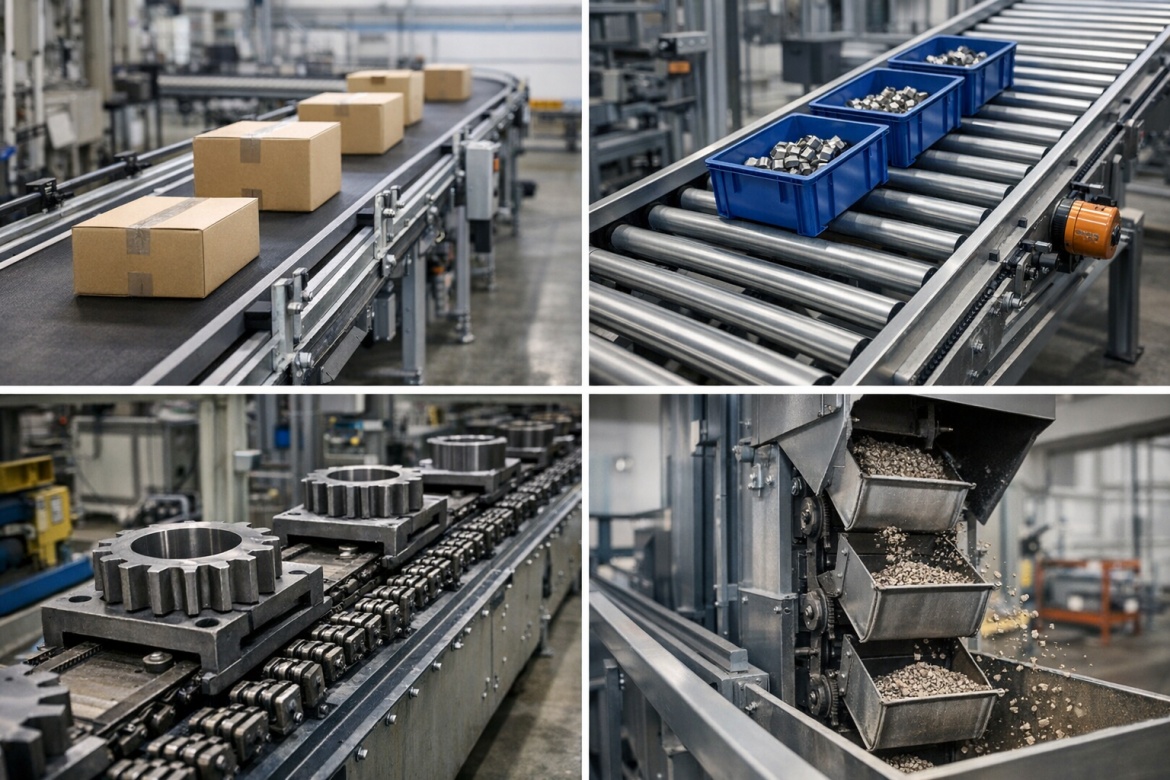
Tubular Chain Conveyors: Mechanical Solutions for Customized Bulk Handling
Rising demands on in-plant material transport require innovative solutions, especially when challenging bulk materials must be conveyed efficiently, safely, and hygienically. Tubular chain conveyors have become a true all-rounder in this segment. Combining flexibility, gentle material handling and intelligent integration into complex plants, these systems set new standards. But how are truly customized solutions engineered and implemented?
The Unique Challenge: Bulk Materials Are Changing
- Transport of dry, moist or pasty products
- Overcoming long routes with multiple curves, inclines and declines
- Minimizing product loss and cross-contamination
- Integration into confined or existing production environments
The Advantages of Tubular Chain Conveyors in Industrial Environments
Companies using tubular chain conveyors benefit from several key advantages. Their hermetically sealed design enables both light and abrasive or hygroscopic raw materials to be conveyed reliably and dust-free. Operating with low noise levels and reduced maintenance needs, these systems are ideal wherever process reliability and efficiency are paramount.
The system’s modular configuration unlocks new possibilities in plant design. Conveying routes can be laid out horizontally, vertically or at virtually any spatial angle. Constraints from limited space, low ceilings or intricate building layouts are often elegantly overcome.
Tailored Solutions for Specialized Applications
The strengths of modern tubular chain technology become especially clear when standard solutions fail. Materials that are difficult to handle—such as heavy-flowing bulk materials, pasty masses or temperature-sensitive media—demand much from materials, seals, and conveying speed. Expertise and experience in plant engineering are essential, because perfect process alignment counts for more than mere physical installation.
B&K Anlagentechnik designs, engineers and manufactures tubular chain conveyors that are precisely matched to each production process. Alongside conveying capacity and energy efficiency, attention is also paid to ATEX compliance, gentle handling and ease of maintenance. The core principle: a conveyor solution that fits seamlessly into the overall process, rather than the other way around.
Trends: Digitization and Automation in Conveyor Technology
The future of mechanical conveying is digital. Sensors, condition monitoring, and intelligent controls are rapidly gaining ground in the tubular chain field. Transparency, efficiency and remote serviceability are increased. Production workflows become more dynamic and flexible, with the ability to minimize stoppages and predict maintenance requirements ahead of time.
The importance of easy integration into higher-level control systems is also growing. Interfaces to MES or ERP solutions ensure that conveyor technology is fully embedded into the value chain and intelligent production networks can be realized.
Conclusion: Greater Efficiency Through Intelligent Planning and Technology
Tubular chain conveyors exemplify the direction of bulk conveyor engineering: away from rigid standardization, toward flexible, individually engineered systems designed around actual processes and site conditions. Investing in expertise, precise system design and modern components pays off—especially where safety, hygiene and efficiency are critical to success.