

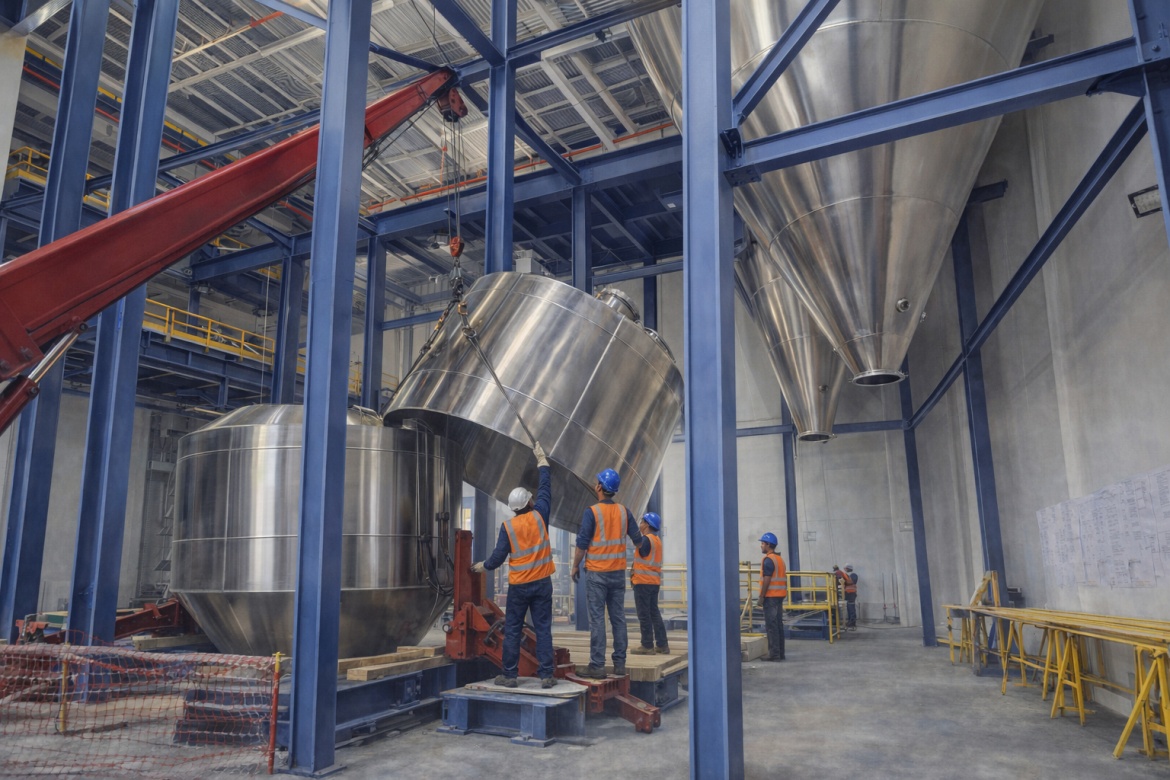
Efficient Discharge Systems: The Heart of Modern Silo Technology
Silo and tank construction constantly confronts engineers with the task of creating individualized solutions for a variety of materials. A crucial yet often underestimated element is the discharge system. Its selection determines whether material flows reliably, with low maintenance and without product damage—decisive factors for the efficiency and quality of every industrial process.
The optimal discharge system depends on many factors, beginning with the choice of materials for the silo or tank itself.
- Materials such as stainless steel, aluminum, PE or rubber offer different advantages depending on the industry—ranging from hygiene and corrosion protection to enhanced stability.
- In addition to the bulk material’s properties, flowability, moisture content, and dosing accuracy must be carefully considered.
- Large silos are increasingly designed on a project basis, while manufacturing and assembly can be flexibly realized worldwide.
- Integrated discharge systems significantly reduce product losses and ensure process safety—even with challenging materials like highly viscous substances or sensitive powders.
Custom Planning over Standard Solutions
Modern silos must do more than simply store materials. Customized plants combine precise dosing, continuous material flow, and high availability—even under extreme conditions. Specialists conduct comprehensive analyses of all process-related variables. This allows silos—across plastics, food, and chemical industries—to be constructed and equipped precisely to the demands of each raw material.
A wide variety of components and discharge aids are used: vibrating bottoms, pneumatic systems, pocket conveyors, or discharge screws. These ensure reliable emptying without bridge formation or clumping—even with materials that are difficult to handle. Considerations such as explosion protection (e.g., ATEX-compliant systems) and environmental safety are also integrated into the early planning stages.
Global Design, Local Execution: Saving Costs and Shortening Pathways
The trend in silo and tank construction is toward global engineering with flexible realization onsite. Technically sophisticated large silos are increasingly designed in a way that allows local partners to manufacture or even for end-customers to supply them. Accessories—such as matching discharge systems, control, and weighing technology—are then specifically engineered and delivered. The result: Lower transport costs and optimized delivery times, without compromising on quality or technical precision.
This approach not only increases overall plant efficiency, but also enhances the ability to adapt to changing markets and requirements. Modern discharge systems thus become a key factor for success in a wide range of industrial sectors.